Trying to decide between a townhome and a single-family home in Minneapolis? You are not alone. For many buyers, this choice comes down to more than price. It is really about how you want to live, what kind of upkeep you want to handle, and how much flexibility matters to you day to day. If you are weighing both options, understanding the Minneapolis market and the tradeoffs can help you move forward with confidence. Let’s dive in.
Minneapolis prices vary by property type
In Minneapolis, both townhomes and single-family homes can fit a wide range of budgets, but the numbers do not always tell one simple story. Different data sources track different geographies, time frames, and property categories, so it is smart to look at pricing as a range rather than one fixed number.
As of early 2026, Minneapolis remains a competitive market. Redfin reported that homes were getting about three offers on average, selling in around 30 days, and posting a median sale price of $355,000. The Minneapolis Assessor reported a citywide median sale price of $368,000 for single-family homes, while a broader metro report from Homes.com showed median sale prices of $400,000 for single-family homes and $285,000 for townhomes.
That spread matters because your actual options will depend heavily on neighborhood, condition, and monthly ownership costs. In Minneapolis, the label on the property type is only part of the picture.
Single-family homes offer more range
Single-family pricing in Minneapolis covers a wide spectrum across the city. The 2026 assessment report shows ward-level median sale prices ranging from about $244,200 in Ward 4 to $570,500 in Ward 13.
That tells you something important. When you compare two single-family homes, location can have just as much impact as square footage or lot size. A detached home in one part of Minneapolis may compete directly with a townhome in another area, especially if you are prioritizing commute, walkability, or outdoor space.
Townhomes can lower entry price
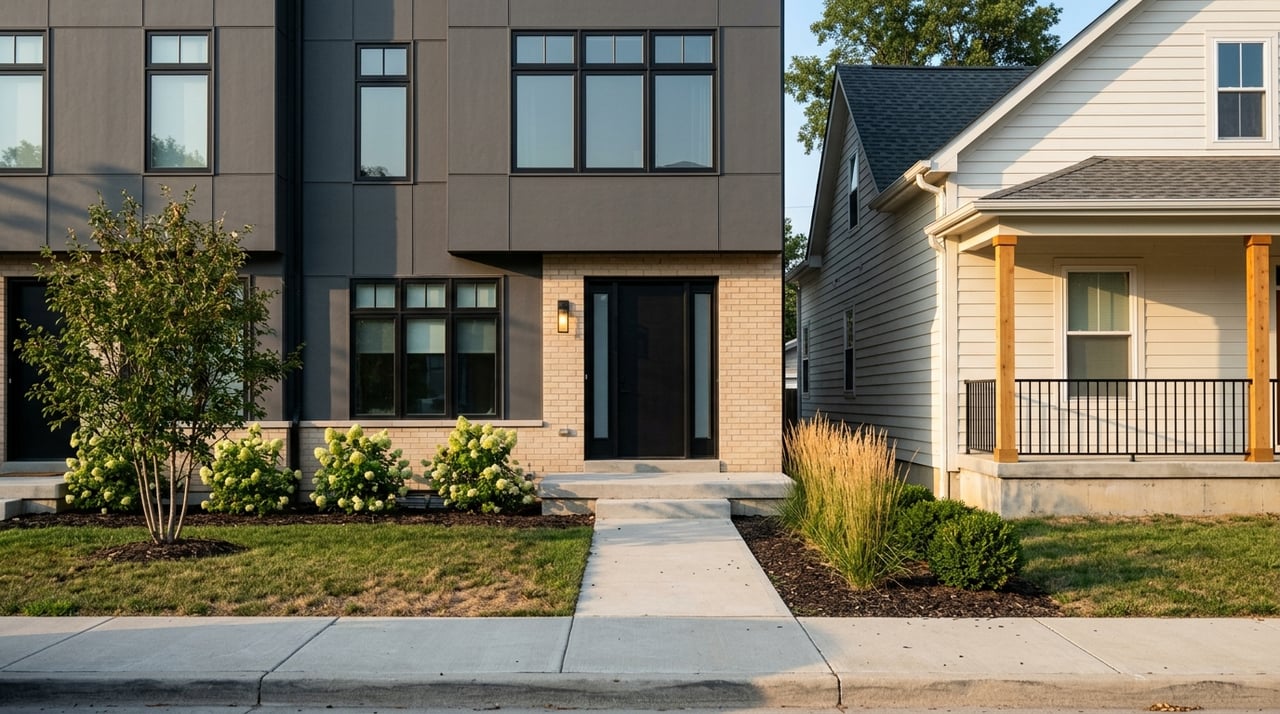
Townhomes often appeal to buyers looking for city access with less exterior upkeep. A broader March 2026 metro report placed the median townhome sale price at $285,000, which is well below the same report’s single-family median.
At the same time, active Minneapolis townhome listings showed plenty of variety. Redfin reported 121 townhomes for sale with a median listing price of $385,000, and listing examples ranged from roughly $220,000 to $765,000. That means you can find everything from more affordable attached homes to higher-end properties in sought-after areas.
Minneapolis location shapes the decision
Minneapolis is a fairly walkable city, with Redfin assigning it a Walk Score of 71. Townhomes are not limited to one part of town either. Listings appear in areas such as Como Park, Linden Hills, Northeast Minneapolis, and Southwest Minneapolis, which gives buyers more flexibility if they want attached living outside a strictly downtown setting.
For many buyers, that makes this a lifestyle decision as much as a financial one. If being close to local amenities, a shorter commute, or a lower-maintenance setup matters most, a townhome may check more boxes. If private space and control matter more, a single-family home may feel like a better fit.
Townhome living means shared systems
One of the biggest reasons buyers consider townhomes is maintenance. In many communities, the homeowners association handles shared elements and helps fund day-to-day operations and long-term repairs through regular assessments.
That setup can make townhome ownership feel simpler, especially if you do not want to manage as much exterior work yourself. But it also means you need to factor in monthly dues and the possibility of special assessments if the association needs more funds for repairs or reserves.
HOA dues affect monthly cost
The purchase price is only one part of affordability. Some active Minneapolis townhome listings showed monthly HOA fees such as $324 or $640.
Those dues may cover services or shared expenses, but they still affect your monthly budget. A townhome with a lower purchase price can end up feeling less affordable than expected if the dues are high or if reserve funding is weak.
Rules shape daily use
Townhome living also comes with association rules. Minnesota guidance notes that associations may regulate things like parking, pets, smoking, bird feeders, and exterior appearance.
For some buyers, that structure is helpful because it creates a more predictable environment. For others, it can feel restrictive. Before you buy, it helps to think honestly about how much flexibility you want in your home and on your property.
Single-family homes offer more control
Detached homes usually give you more direct control over the property. You are generally making your own decisions about the yard, exterior updates, and how the outdoor space is used.
That can be a major advantage if privacy matters to you or if you want room for gardening, entertaining, storage, or future projects. In Minneapolis, lot size can also be part of the value story for single-family homes in a way it often is not for townhomes.
More privacy, more upkeep
The tradeoff is straightforward. Single-family homes usually offer more privacy and fewer shared walls, but they also put more responsibility on you.
Roof work, siding, snow removal, landscaping, and exterior repairs are typically yours to manage directly. If you prefer having more control and do not mind handling the maintenance, that can be a strong reason to choose a detached home.
Outdoor space looks different
Outdoor living is another area where the two property types tend to differ. Minneapolis townhome listings often highlight patios, decks, and garage convenience rather than large yards.
Single-family homes more often feature private yard space as part of the appeal. So if your ideal setup includes a bigger lawn or more separation from neighbors, a detached home may line up better with your goals.
What to review before buying a townhome
If you are leaning toward a townhome, the documents matter almost as much as the home itself. In Minnesota, sellers are generally required to provide key association documents, including the declaration and amendments, bylaws, articles of incorporation, rules and regulations, a disclosure statement or resale disclosure certificate, the most recent financial statement and current budget, and any outstanding judgments or lawsuits involving the association.
Minnesota guidance also says buyers generally have 10 days after receiving those disclosures to cancel the purchase agreement, unless that right is waived in writing or the disclosures were provided more than 10 days before signing. That review window can be very important.
Focus on the big cost questions
When you review association materials, pay close attention to the items that could affect your ownership costs and your day-to-day experience. A few of the most important include:
- Current monthly dues
- Reserve funding
- History of special assessments
- Insurance coverage
- Pending litigation or judgments
- Rules that affect how you use the property
These details can tell you whether the community appears financially prepared and whether the rules match your lifestyle.
Long-term costs matter in Minneapolis
Whether you choose a townhome or a single-family home, your monthly and annual costs can change over time. In Hennepin County, property tax statements are mailed in March, and the first payment is due May 15. The statement includes estimated market value, classification, levies, credits, taxes owed to each unit of government, and any special assessments.
The City of Minneapolis notes that assessors set classification and estimated market value by January 2, send valuation notices in March, and review every property once every five years. That means ownership costs are not static, even if your home stays the same.
Which option fits your lifestyle?
For many Minneapolis buyers, the best choice comes down to how you want your daily life to feel. A townhome often works well if you want a more lock-and-leave lifestyle, less exterior upkeep, and a location that feels close to the city’s activity.
A single-family home often makes more sense if you want more privacy, more direct control over the property, and fewer association restrictions. Neither option is automatically better. The right fit depends on your budget, your priorities, and the kind of ownership experience you want over the next several years.
How to compare homes clearly
If you are shopping in Minneapolis, it helps to compare homes using the full picture instead of the list price alone. Look at:
- Purchase price
- HOA dues, if any
- Property taxes
- Special assessments
- Exterior maintenance responsibilities
- Outdoor space
- Rules and restrictions
- Neighborhood location and access needs
This kind of side-by-side comparison often makes the decision much clearer. It helps you see whether a lower-maintenance townhome or a more independent single-family home truly fits your goals.
If you want help weighing the tradeoffs in real time, Warner Group can help you compare options, understand the numbers, and move forward with a plan that fits your lifestyle and budget.
FAQs
What is the main difference between townhome and single-family living in Minneapolis?
- Townhomes often offer less exterior upkeep and more shared systems, while single-family homes usually offer more privacy, more control, and more direct maintenance responsibility.
Are townhomes cheaper than single-family homes in Minneapolis?
- They can be, but not always. Some market data shows lower median townhome sale prices, yet active listings vary widely, and HOA dues can significantly change the monthly cost.
What should you review before buying a Minneapolis townhome?
- Review the association budget, reserve funding, special assessment history, insurance coverage, litigation status, and the rules that affect daily use of the property.
Do Minneapolis townhomes always have HOA fees?
- Many do, and those fees help fund operations and long-term expenses for the association. The exact amount and what is covered can vary by community.
How do property taxes affect Minneapolis homeownership costs?
- Property tax statements include estimated market value, classification, levies, credits, taxes owed, and any special assessments, so they are an important part of your long-term cost planning.
How do you choose between a Minneapolis townhome and a single-family home?
- Start with your lifestyle. If you want less exterior work and are comfortable with shared walls and rules, a townhome may be a strong fit. If you want more privacy and control, a single-family home may be the better choice.